
Blog

shape
shape
shape
shape
shape
shape
shape
shape
Standard

How to Recycle IT Equipment Responsibly in the US (EPA & WEEE Tips)

Stay Compliant, Secure, and Sustainable with Smart IT Recycling As technology evolves, so does the volume of retired electronics. From servers and laptops to switches and storage devices, U.S. businesses are generating massive amounts of e-waste. But improper disposal can lead to data breaches, legal trouble, and environmental harm. That’s why responsible IT equipment recycling isn’t just a green initiative — it’s a business necessity. At Maxicom US, we help companies recycle IT equipment securely and in full compliance with EPA guidelines and WEEE-inspired standards. Why Responsible Recycling Matters Understanding the EPA Guidelines for E-Waste Recycling The U.S. Environmental Protection Agency (EPA) offers clear guidelines for managing e-waste, including IT assets: Maxicom US partners only with certified downstream vendors and provides full audit trails. What Is WEEE, and How Does It Apply in the U.S.? While the Waste Electrical and Electronic Equipment (WEEE) Directive originates in Europe, its principles are gaining popularity in the U.S., especially among multinational corporations. WEEE promotes: Maxicom US incorporates WEEE-aligned best practices for global clients. 5 Steps to Recycle IT Equipment Responsibly 1. Audit and Identify Retired Equipment Start by compiling an inventory of all outdated hardware. Include: Tip: Maxicom can provide on-site asset tagging and audit reports. 2. Ensure Secure Data Destruction Before recycling, you must wipe or destroy all data using compliant methods: Maxicom US offers on-site and off-site destruction with documentation. 3. Choose a Certified ITAD Vendor Only partner with recyclers that hold industry certifications: Ask for proof of certification and downstream recycling partners. 4. Document and Report the Recycling Process Maintain detailed records for compliance, audits, and ESG tracking: Maxicom provides detailed, exportable documentation for your records. 5. Explore Reuse and Remarketing Options Before recycling, check if equipment can be refurbished and resold. This reduces waste and increases ROI. Maxicom offers asset recovery services to refurbish and remarket viable equipment before final disposal. Avoid Common IT Recycling Mistakes ❌ Throwing e-waste in the trash❌ Using uncertified recyclers❌ Ignoring data sanitization❌ No proof of compliance❌ Not tracking the environmental impact Partner with Maxicom US for Secure & Sustainable IT Recycling With years of experience in ITAD, reverse logistics, and data destruction, Maxicom US ensures: Whether you’re decommissioning a data center or upgrading your office tech, we’ll help you recycle with confidence. Let’s Talk Recycling Contact us today for a free consultation or pickup quote:📧 usa-sales@maxicom.global🌐 www.maxicom.us Maxicom US – Secure, Sustainable, Certified.
Standard

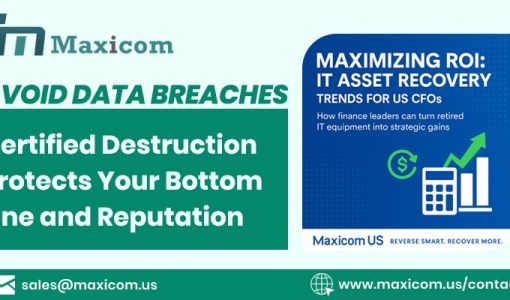
Maximizing ROI: IT Asset Recovery Trends for US CFOs

Maximizing ROI: IT Asset Recovery Trends for U.S. CFOs How Finance Leaders Are Turning Retired IT Equipment into Strategic Financial Gains As digital transformation accelerates across the United States, IT refresh cycles are becoming shorter. Servers, laptops, storage systems, and networking infrastructure are replaced more frequently than ever before. For CFOs, this shift presents both a financial challenge and a strategic opportunity. Millions of dollars’ worth of retired IT assets often sit idle in storage rooms, depreciating rapidly. However, forward-thinking finance leaders now recognize that IT asset recovery is not merely an operational clean-up task — it is a capital efficiency strategy that directly impacts ROI, ESG performance, and compliance risk management. Why IT Asset Recovery Is a Financial Strategy Today’s CFOs are responsible for: Retired IT equipment should be evaluated as recoverable assets rather than sunk costs. With structured IT asset recovery and IT asset disposition (ITAD) programs, organisations can convert surplus infrastructure into measurable financial returns. 2025 IT Asset Recovery Trends CFOs Should Monitor 1️⃣ Monetizing Decommissioned Infrastructure The secondary market for enterprise IT equipment remains strong. Refurbished servers, storage arrays, and networking devices continue to see demand across SMBs, startups, and emerging markets. Many U.S. enterprises recover between 10–30% of original asset value when assets are remarketed strategically. Finance Insight: Recovery value should be incorporated into total lifecycle cost calculations during procurement planning. 2️⃣ Budget Integration of Recovery Value More finance teams now include projected recovery value in IT lifecycle forecasting models. Instead of treating decommissioned assets as write-offs, recovery estimates are factored into long-term capital planning. This improves: 3️⃣ ESG & Sustainability as Financial Drivers Investors increasingly evaluate ESG metrics when assessing enterprise performance. Responsible IT asset recovery contributes to: By integrating recovery programs, CFOs strengthen environmental accountability while maintaining financial discipline. 4️⃣ Data Security as Risk Mitigation Improper IT disposal exposes organisations to: Certified data destruction — aligned with standards such as NIST 800-88 — has become a financial safeguard, not just a technical requirement. CFOs should ensure vendors provide: 5️⃣ Reverse Logistics for Multi-Site Enterprises Nationwide IT rollouts and refresh programs generate large volumes of surplus equipment. Coordinated reverse logistics enables: This reduces operational disruption and maximizes recovery value. The Financial Impact of Structured IT Asset Recovery When implemented strategically, IT asset recovery supports: Rather than being treated as a cost center, recovery programs function as capital optimization mechanisms. Frequently Asked Questions for CFOs How should recovery value be treated in financial planning? Projected resale value should be incorporated into lifecycle budgeting to improve capital allocation efficiency. What assets typically generate the highest recovery returns? Enterprise servers, storage systems, networking equipment, and high-performance components often retain significant secondary market value. How does IT asset recovery support ESG reporting? Refurbishment and reuse reduce environmental impact and support sustainability disclosures in annual and ESG reports. What compliance risks should CFOs consider? Improper disposal may result in violations of data protection laws and industry regulations. Certified data sanitization and documentation mitigate these risks. Turning IT Recovery Into Competitive Advantage CFOs who proactively manage IT asset recovery strengthen financial resilience, improve capital efficiency, and align operational practices with sustainability mandates. As refresh cycles continue to accelerate, structured IT asset recovery becomes an essential pillar of financial governance — not just an IT function. Recover More from Your Retired IT Assets If your organisation is planning a data centre refresh, nationwide equipment upgrade, or surplus asset liquidation, integrating recovery planning into financial strategy can unlock measurable value. Explore how structured IT asset recovery can improve ROI while maintaining compliance and sustainability standards. 🌐 Visit: www.maxicom.us Maxicom US – Reverse Smart. Recover More.

Standard

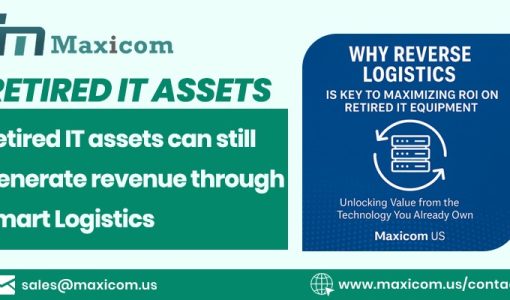
Why Reverse Logistics is Key to Maximizing ROI on Retired IT Equipment

Unlocking Value from the Technology You Already Own In today’s rapidly evolving digital environment, businesses are upgrading their IT infrastructure faster than ever. But what happens to the retired servers, desktops, laptops, and networking equipment that are no longer in use? If they’re collecting dust—or worse, ending up in landfills—you could be missing a significant opportunity to recover value. This is where reverse logistics plays a crucial role. At Maxicom US, we help businesses turn end-of-life IT assets into revenue streams through efficient, compliant, and sustainable reverse logistics practices. What Is Reverse Logistics? Reverse logistics refers to the process of moving goods from the end user back to the seller or manufacturer for return, refurbishment, resale, recycling, or proper disposal. In the context of IT asset disposition (ITAD), it includes: https://maxicom.ca/services/Instead of a sunk cost, your retired IT equipment becomes a recoverable asset. The Hidden Value in Retired IT Assets Many businesses still view aging tech as worthless. In reality, devices like servers, workstations, switches, and even smartphones hold resale and reuse value—as long as they are properly handled. With Maxicom US’s reverse logistics solutions, companies benefit from: 5 Reasons Reverse Logistics Maximizes ROI 1. Reduces Capital Waste Retiring IT assets too early or improperly can result in unnecessary capital loss. Reverse logistics helps assess resale potential and recover value. 2. Streamlines Asset Management By tracking the return and disposition process, companies gain better control over asset lifecycles and inventory. 3. Improves Compliance & Data Security Professional ITAD providers ensure regulatory compliance (e.g., HIPAA, CCPA, FTC Safeguards Rule) and certified data destruction. 4. Supports ESG Goals Refurbishing and reselling extend the useful life of devices and reduce electronic waste—an essential part of any sustainability strategy. 5. Enhances Brand Image Environmentally responsible practices and proper data handling build trust with stakeholders, clients, and regulators. How Maxicom US Delivers End-to-End Reverse Logistics We provide a seamless, secure, and transparent process that ensures you gain the maximum value from your retired IT assets: 🔁 Pickup & Transport Secure, insured logistics tailored to your enterprise scale—whether a single site or multiple data centers. 📦 Asset Tagging & Auditing Every device is cataloged and tracked using our asset management software. We provide complete visibility and reports. 💾 Certified Data Destruction On-site or off-site data wiping, shredding, or degaussing—100% compliant with NIST 800-88, DoD, and HIPAA standards. 💸 Refurbishment & Resale Our global remarketing network ensures you get the best value for working assets. 🌱 Responsible Recycling Non-functional devices are ethically and legally recycled through R2v3 and e-Stewards certified partners. Real-World Results A U.S.-based fintech company partnered with Maxicom US to decommission 1,500 desktops and servers. Through our reverse logistics model: Conclusion Reverse logistics isn’t just a cost-saving initiative—it’s a strategic move to maximize ROI, protect your data, and contribute to sustainability. If your retired IT assets aren’t managed properly, you’re losing value every day. Let Maxicom US help you turn outdated tech into bottom-line benefits. Let’s Recover Your ValueVisit: www.maxicom.us Maxicom US – Reverse Smart. Recover More.

Standard

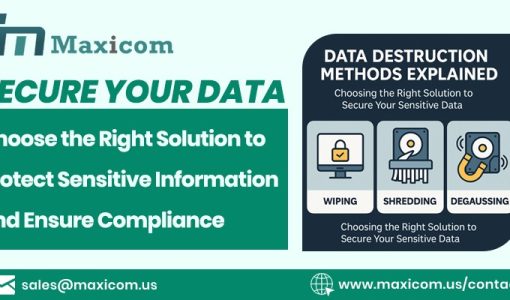
Data Destruction Methods Explained: Wiping vs. Shredding vs. Degaussing

Choosing the Right Solution to Secure Your Sensitive Data In today’s digital age, the risk of data breaches doesn’t end when your equipment is powered off. Businesses that dispose of IT assets without proper data destruction can expose themselves to identity theft, lawsuits, and compliance penalties. Whether you’re decommissioning a data center or retiring old office computers, understanding the main data destruction methods—wiping, shredding, and degaussing—is essential to protect your organization. At Maxicom US, we specialize in certified and secure IT Asset Disposition (ITAD). In this blog, we’ll explain each data destruction method, its pros and cons, and when to use which. Why Data Destruction Matters Every hard drive, SSD, mobile device, or backup tape contains residual data—even after files are deleted. Without secure destruction, that data can be recovered using basic tools. Improper disposal can lead to: That’s why choosing the right data destruction method matters. Method 1: Data Wiping (Data Sanitization) 🔍 What Is It? Wiping is the process of overwriting data on a storage device using software so the original information is unrecoverable. It is performed on functioning devices and follows protocols like NIST 800-88 Rev.1. ✅ Pros: ❌ Cons: 💼 Ideal For: Enterprises looking to maximize asset recovery value through resale or redeployment of wiped devices. Method 2: Physical Shredding 🔍 What Is It? Shredding destroys hard drives, SSDs, and tapes by mechanically grinding them into tiny pieces, making data recovery impossible. ✅ Pros: ❌ Cons: 💼 Ideal For: Companies handling classified data, highly regulated industries (finance, healthcare, defense), or end-of-life IT assets. Method 3: Degaussing 🔍 What Is It? Degaussing uses a strong magnetic field to disrupt the magnetic domains on a hard drive or tape, erasing all stored data. ✅ Pros: ❌ Cons: 💼 Ideal For: Organizations needing to erase bulk magnetic media before disposal or shredding. Maxicom US: Certified Data Destruction You Can Trust We help companies across the U.S. choose and implement the right data destruction method for their security, compliance, and sustainability goals. Our Services Include: We follow globally accepted standards, including: Choosing the Right Method: A Quick Comparison Method Reusable Device? Works on SSDs? Compliance Friendly? Wiping ✅ Yes ✅ Yes ✅ Yes Shredding ❌ No ✅ Yes ✅ Yes Degaussing ❌ No ❌ No (HDDs only) ✅ Yes Final Thoughts No matter your industry or device type, secure data destruction is not optional—it’s essential. Choosing the correct method—wiping, shredding, or degaussing—can help your business: Maxicom US is here to help with certified, secure, and environmentally responsible ITAD solutions. Get a Free Data Destruction Assessment 🌐 Visit: www.maxicom.us Maxicom US – Safeguard Your Data. Protect Your Brand.